The Crusher in the Tushar is the most demanding gravel race in Utah and one of the hardest in the American West. Set in the Tushar Mountains above Beaver, Utah, it combines high altitude, brutal climbing, and a remote course that separates it from the managed safety of major events like Unbound or SBT GRVL. Here’s everything you need to know about the Crusher in the Tushar 2026.
What Is the Crusher in the Tushar?
The Crusher was founded by Burke Swindlehurst, a former professional road cyclist and Utah native who built the event to showcase his home terrain. It’s a point-to-point and loop format race that climbs into the Tushar Mountains above Beaver on a combination of dirt forest service roads and paved highway sections. The total distance is approximately 70 miles with 10,000+ feet of climbing — a climbing-per-mile ratio that rivals any event in North America.
The Crusher is not a Life Time Grand Prix event, which gives it a more intimate, community feel than the major Grand Prix races. The field is smaller, the atmosphere is more personal, and the support crew and spectators at the finish have a genuine connection to the race. It’s the kind of event that retains all its soul as it grows, which is rarer than it sounds.
The Crusher 2026: Dates and Registration
The Crusher in the Tushar 2026 takes place in July in Beaver, Utah. Registration opens in late winter through the official website. The event sells out annually; sign up as soon as registration opens. Entry fees run approximately $150–$200. Beaver has limited lodging — book early or plan to stay in Parowan (30 minutes north) or Cedar City (45 minutes south). Check our race calendar for exact dates when they’re confirmed.
The Course: Why It’s Called the Crusher
The course begins in downtown Beaver and immediately begins climbing. The main ascent — a sustained 18-mile climb on paved road and dirt forest service roads — gains 5,000 feet to the Tushar ridgeline above 11,000 feet. The climb is the race. Those who go too hard on the first pitches lose the ability to sustain effort at altitude; those who pace it conservatively arrive at the ridgeline with something to race with.
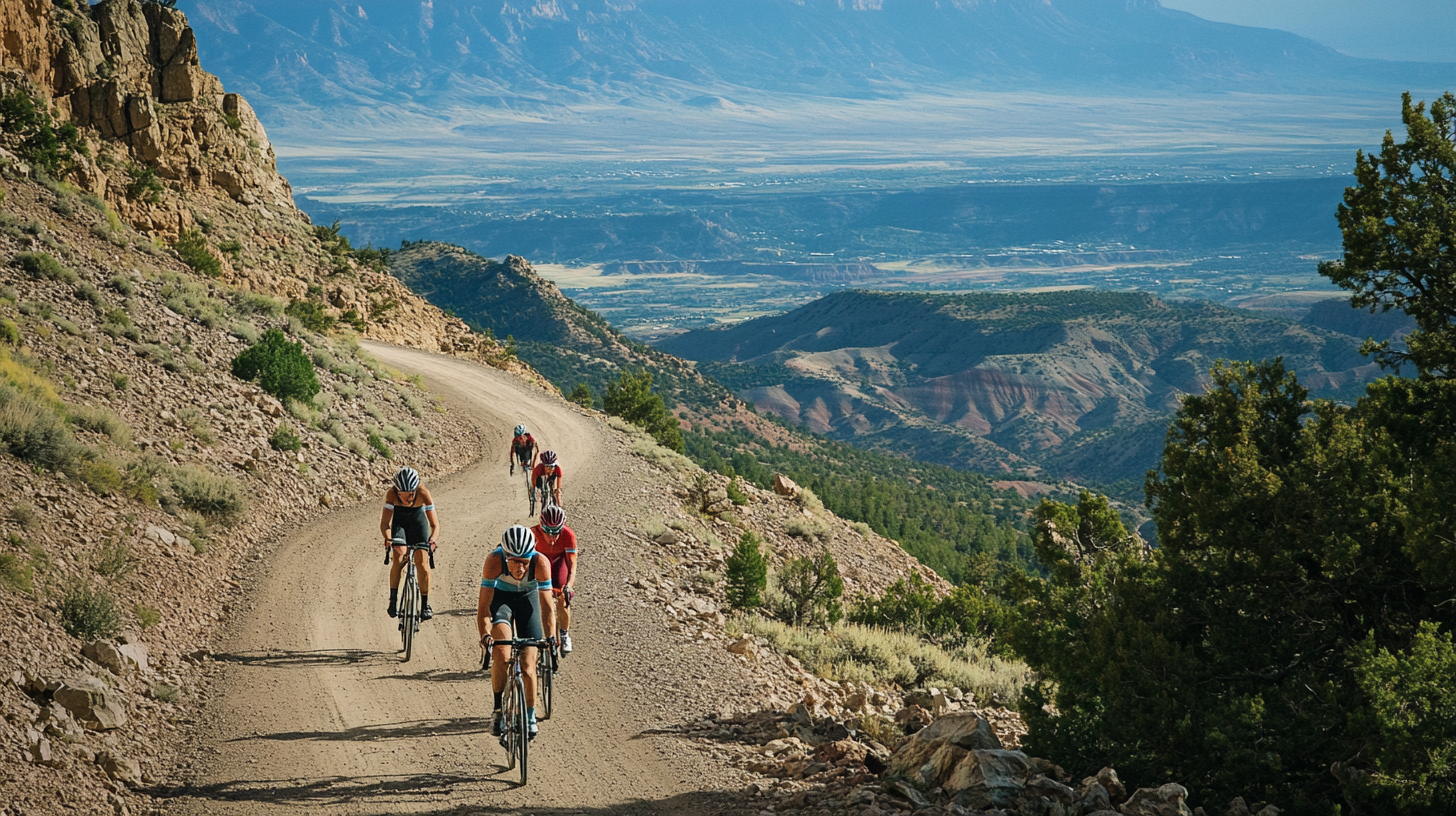
The middle section of the course traverses the ridgeline on exposed dirt roads with 360-degree views of southern Utah. The terrain here is loose and rocky — technical enough to cause problems for pure road cyclists but manageable for experienced gravel riders. The descent back to Beaver is long and fast, and it’s where time can be made up — or lost dramatically if you’re not comfortable descending on loose gravel at speed.
Training for the Crusher
The Crusher’s altitude demand is non-negotiable. Beaver sits at 5,900 feet; the course climbs to 11,000+ feet. If you’re not altitude-adapted, plan to arrive in Beaver at least 3–4 days before the race. Train with sustained climbing throughout your build — 2,000+ foot climbs in training are directly relevant, while flat endurance riding is less so. For the best preparation, a training camp in Colorado, Utah, or any mountain range at elevation in the 6–8 weeks before race day is high-value.
Gear priorities: tire selection for rocky terrain (44mm+ with real tread), gearing for sustained altitude climbing (1x with a 42t+ cassette), and cold-weather kit in your pockets. July temperatures in Beaver can be 90°F at the start and 50°F at the ridgeline — dressing for both extremes with packable layers is essential. Many riders have underestimated the cold at elevation and had a very difficult second half of the race as a result.
Why the Crusher Is Worth It
The Crusher in the Tushar has a devoted community of returning riders who come back year after year for the combination of extraordinary terrain, intimate race atmosphere, and the genuine challenge of finishing a 70-mile race with 10,000 feet of climbing at altitude. It’s not a race you can talk yourself through with fitness alone — the climbing and terrain demand respect and preparation. Finishing the Crusher is something you remember for a long time.
For training guidance building toward high-altitude racing events, see our 12-week training plan. For more on gravel racing in Utah’s mountain terrain, see our Utah gravel routes guide.
See the full 2026 gravel race calendar — mountain events, Grand Prix races, and more. → Full Race Calendar