Gravel race recovery is the most neglected part of most riders’ training plans. You spend months building fitness, execute a race, and then — nothing. No structure, no plan, just a hope that you’ll feel better in a week or two. The science of recovery has become much clearer in recent years, and applying it systematically means you’ll get back to full training sooner, reduce your injury risk, and actually build on the fitness gains the race produced. Here’s the complete protocol.
What Happens to Your Body During a Long Gravel Race
A 100–200 mile gravel race creates specific physiological damage that’s different from shorter efforts. Prolonged mechanical stress causes micro-tears in muscle fibers — more than a short, intense effort because the duration means repetitive loading on the same tissue over many hours. Glycogen stores are fully depleted. Inflammatory markers are elevated for 24–72 hours. Immune function is suppressed for 24–48 hours. And unlike a road criterium, the rough terrain of a gravel race creates additional muscle damage through sustained vibration and the constant micro-stabilization work of rough surfaces.
Understanding this damage is the first step to recovering from it intelligently. Most of what your body needs in the days after a long gravel event is time, nutrition, and sleep — not more training, not stretching, not a foam roller session. The acute recovery window (first 72 hours) is about giving your body the raw materials it needs to repair; everything else can wait.
Race Day Recovery: The Immediate Window
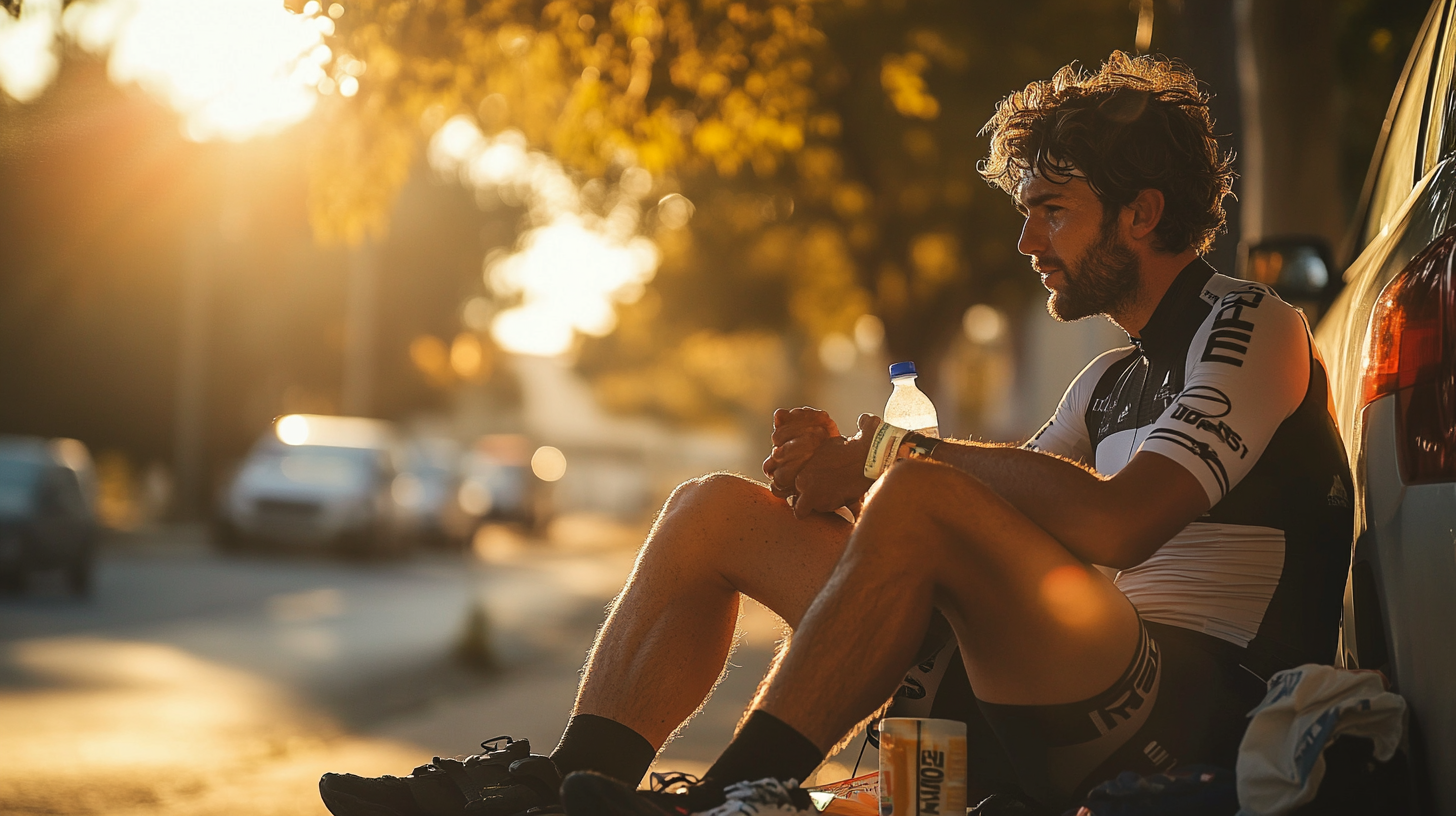
The 30 minutes immediately after crossing the finish line is the most important recovery window. Muscles are maximally insulin-sensitive and primed for glycogen replenishment. Get 40–60 grams of carbohydrate and 20–30 grams of protein in immediately — the classic option is chocolate milk (4:1 carb-to-protein ratio), but a recovery drink, chocolate milk powder in water, or even a PB&J sandwich works. Rehydrate: aim for 500–750ml of water or electrolyte drink in the first hour after finishing.
Avoid: alcohol in the first 4–6 hours post-race (impairs muscle protein synthesis), excessive NSAIDs (ibuprofen and similar drugs blunt the inflammatory response that’s necessary for repair), and intense activity including extensive walking, standing, or lifting. Rest means rest — sit or lie down for at least 1–2 hours after finishing.
Day 1–3: The Acute Recovery Phase
The first three days after a 100+ mile gravel race should be almost completely inactive. Light walking is fine; anything more intense is counterproductive. Your body is repairing muscle tissue, restoring glycogen, and regulating the hormonal disruption caused by the race effort. Fighting this process by training through it delays recovery and increases injury risk.
Nutrition priority during this phase: total calorie intake matters more than usual. Your metabolism remains elevated for 24–48 hours after a long race, and undereating in this window impairs repair. Prioritize anti-inflammatory foods: fatty fish (salmon, sardines), berries, leafy greens, olive oil. Sleep is the most powerful recovery tool available — aim for 9+ hours per night for the first 3–5 days after the race.
Day 4–7: Return to Easy Movement
By day 4, most riders feel psychologically ready to ride even if their body isn’t fully recovered. This eagerness is normal but potentially harmful. The rule: if you have any significant muscle soreness or fatigue, don’t ride with intensity. A 30–45 minute easy spin at Zone 1 — genuinely easy, conversation pace, flat terrain — is appropriate for day 4 or 5 as active recovery. It increases blood flow to recovering muscles without adding to training load.
Listen to your legs on that first easy ride. If they feel dead and heavy throughout, take another day off. If they feel normal by the end of the ride, you’re ready to progress. Add 15–20 minutes to each subsequent easy ride, keeping intensity below Zone 2 through the end of the first week.
Week 2–3: Return to Structured Training
Most riders can return to normal structured training 10–14 days after a 100-mile race. For 200-mile events like Unbound, expect 2–3 weeks of easy riding before any intensity is appropriate — the deeper the damage, the longer the repair. A useful test for readiness: perform your standard 20-minute threshold effort and compare your power and heart rate response to your pre-race baseline. If your power is 5%+ below normal at the same heart rate, you’re not recovered. Wait another 3–5 days and retest.
Use the recovery period productively: review your race execution, update your training log, plan your next target event. The mental clarity that comes from being off the bike is a useful window for strategy and planning. Check our race calendar to identify your next event and work backward to build your training block. Our 12-week training plan can be cycled again after a proper recovery period.
Ready to race again? Browse every major gravel event on the 2026 calendar. → View the Race Calendar