Choosing the right gravel tires is the single most impactful equipment decision you’ll make for your gravel setup. The best gravel tires of 2026 span a wide range of widths, tread patterns, and construction types — and the right choice depends entirely on your terrain, your event, and your priorities. This guide breaks it all down.
How Wide Should Your Gravel Tires Be?
Width is the first variable to nail down. The gravel tire width spectrum runs from 35mm (fast, road-adjacent) to 50mm+ (adventure and bikepacking territory). For most riders targeting 50–100 mile events on mixed terrain, 40–45mm is the sweet spot. You get enough volume to run low tubeless pressures (28–38 psi for most riders), which improves traction and reduces trail buzz, without sacrificing too much rolling speed on the smoother sections.
For events like Unbound Gravel (Kansas clay) or anything with sustained mud sections, go 45–50mm. For fast hard-pack events like SBT GRVL or the Dirty Douro, 38–42mm with a minimal tread pattern is faster. Check your frame’s tire clearance before buying — many bikes have upper limits of 40–45mm with the right tires, but specific brands run narrow and you need to verify.
Tread Pattern: Matching Tire to Terrain
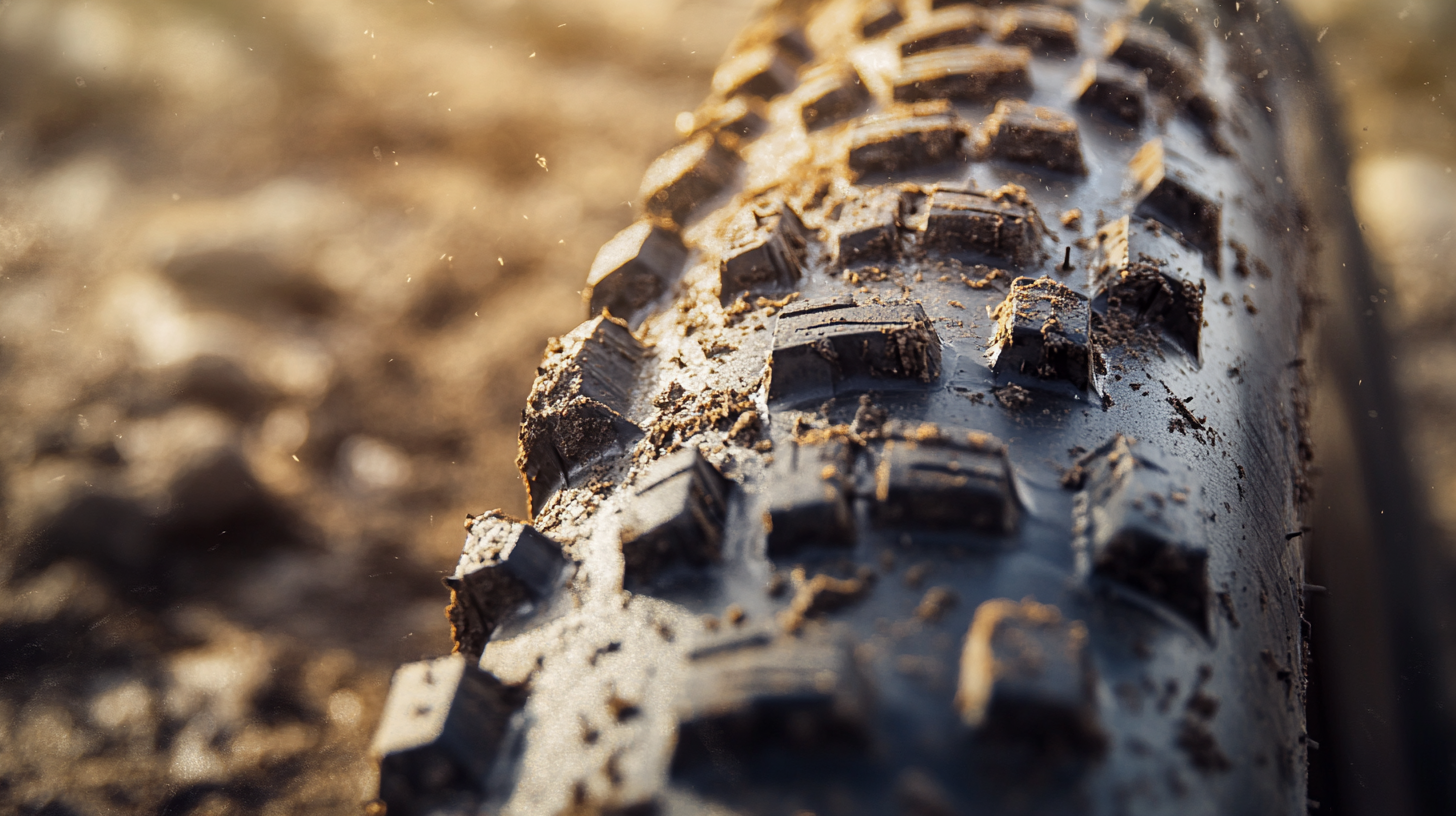
Gravel tires fall into three broad tread categories: file tread (minimal center ridge, small side knobs), mixed tread (defined center tread with moderate side knobs), and aggressive (large separated knobs, full mud or loose-over-hard terrain performance). Most riders do best with a mixed tread that handles both fast hard-pack and loose gravel without sacrificing too much in either direction.
File tread picks: Panaracer GravelKing (not SK version) — industry benchmark for fast mixed terrain in 38–45mm. Rolls fast, tubeless-ready, reasonable price. WTB Resolute 42mm — narrower profile rolls fast while providing solid grip.
Mixed tread picks: Panaracer GravelKing SK — the SK (spike knob) version adds side grip for cornering on loose terrain without sacrificing much rolling speed. Available in 38–50mm. Schwalbe G-One Allround — excellent all-day companion with a tread pattern that inspires confidence on wet PNW roads. IRC Boken — a Japanese tire that’s become popular in the PNW for its predictable wet performance.
Aggressive picks: Schwalbe G-One Ultrabite — the go-to choice for Unbound mud years. Real mud clearance with side knobs that grip effectively in clay. 700×45 is the standard race setup. Teravail Cannonball — excellent mud and loose rock performance in a durable construction.
Tubeless vs. Tubes: Is Tubeless Worth It?
For gravel, tubeless is no longer optional — it’s the standard. Running tubeless allows you to lower pressure by 5–10 psi compared to tubes, which dramatically improves traction and compliance on rough terrain. More importantly, sealant self-heals most small punctures (thorns, small glass) without you ever stopping. In a race context, a flat in road tube mode at mile 80 of 100 is a very different problem than a small puncture that self-seals in tubeless mode.
The setup cost is higher (tubeless-ready rim + tape + valves + sealant), but virtually all modern gravel bikes ship tubeless-ready. Use 2–4oz of sealant per tire and refresh it annually or after any major puncture. Carry one tube and a plug kit as backup — tubeless doesn’t mean flat-proof, it means you’ll have fewer catastrophic flats.
Tire Pressure for Gravel: The Setup Formula
A rough starting point for tubeless gravel tire pressure: rider weight in pounds ÷ 7 = rear pressure in PSI; subtract 2–3 PSI for the front. For a 160-pound rider on 40mm tires: ~23 psi rear, ~20 psi front. These are starting points — adjust based on terrain (more psi for hard-pack, less for loose or rocky terrain) and comfort. Most riders run lower pressures than they think they should.
Signs you’re running too much pressure: you can feel every pebble distinctly through the handlebar, the bike feels nervous on loose corners, you’re fighting the front wheel on rocky descents. Signs you’re running too little: the tire folds under hard cornering, you get rim strikes on sharp rocks, the bike feels vague at speed.
FAQ: Common Gravel Tire Questions
Can I run road bike tires on a gravel bike?
Technically yes, but it’s not recommended. Road tires lack the tread and volume to handle loose gravel and the puncture resistance for sustained dirt road riding. At minimum, move to a 32–35mm mixed-terrain tire before going on gravel. You’ll be slower on the smooth bits but far more capable everywhere else.
How long do gravel tires last?
A high-quality gravel tire typically lasts 2,500–4,000 miles depending on construction and terrain. Rear tires wear faster than fronts. If the center tread has noticeably squared off or you can see fabric through the tread, it’s time to replace. Most riders replace tires annually if they’re doing 200+ miles per month on mixed surfaces.
Should I run the same tire front and rear?
You can, but many riders run a slightly faster-rolling file tread on the rear and a more grippy mixed tread on the front. The front tire provides the majority of steering feel and cornering grip; the rear provides propulsion efficiency. Running a more aggressive tire up front and a faster tire in the rear is a common race-day optimization.
Ready to Race? See What’s on the Calendar
Once your tires are dialed in, the next step is finding a race to test them. Check our gear reviews section for more equipment recommendations, and see the full race calendar for events at every distance and difficulty level. For first-timers, our start here guide covers everything from choosing a race to building your first kit.
Find your next gravel race — the full calendar with distances, dates, and entry links. → Browse the Race Calendar